The challenge every language teacher knows
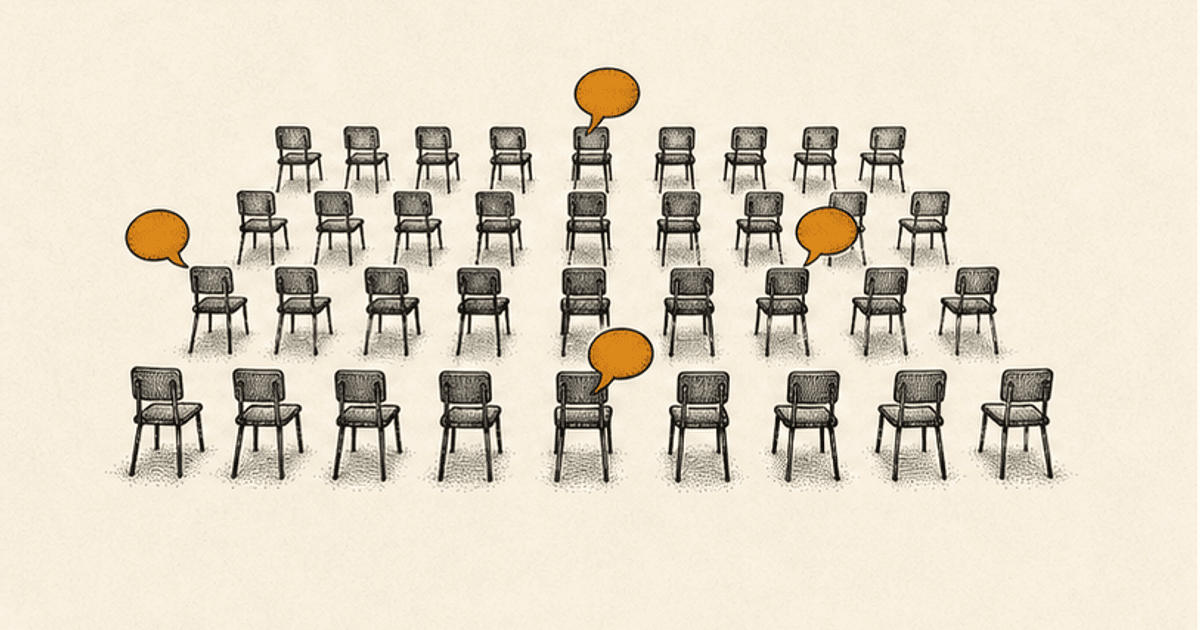
You have 30 students, 50 minutes, and a speaking objective. The textbook says "discuss in pairs" but doesn't mention the logistics: who pairs with whom, what happens when they finish in 90 seconds, how you monitor 15 simultaneous conversations, or what to do with the three students who refuse to talk.
Teachers face the same problem in every large class: speaking practice scales badly when only one student talks at a time. YapYapGo is a classroom speaking practice tool for ESL teachers that runs the whole room in simultaneous pairs from a single projected screen.
Running speaking practice with a large class isn't just harder - it requires a fundamentally different approach than small-group teaching.
Start with the pairing problem
The single biggest time sink in large-class speaking practice is organising who works with whom. Teachers typically default to one of three methods: "turn to your neighbour," teacher-assigned pairs, or letting students choose. Each has serious drawbacks.
Neighbour pairs mean students always work with the same person. Within a few weeks, they've exhausted their conversation strategies and fall into repetitive patterns. Teacher-assigned pairs eat five minutes of class time every lesson. That's over three hours of lost teaching time per semester - just on logistics. Student choice creates cliques, leaves shy students isolated, and often results in L1-dominant pairs who default to their shared first language.The solution is randomised rotation. When pairs are shuffled automatically before each activity, students encounter different partners in every lesson. This builds classroom cohesion, prevents comfort-zone stagnation, and ensures every student gets exposure to different speaking styles and ability levels.