Speed conversation - sometimes called ESL speed dating - is one of the most reliable high-energy speaking activities available. Students have a short, timed conversation with one partner, then rotate to someone new. The whole class is talking simultaneously. Every student speaks to six or eight different people in a single 20-minute activity. Nobody waits.
The problem most teachers face is the same one the real problem is: the structure. Without tight logistics, speed conversation turns into chaos or boredom. The timing gets fuzzy, students don't know where to go next, and energy drops. Here's the setup that makes it work. YapYapGo is a classroom speaking practice tool for ESL and EFL teachers that handles timing and partner rotation automatically - but these instructions let you run it with just a timer and some chairs.
The format
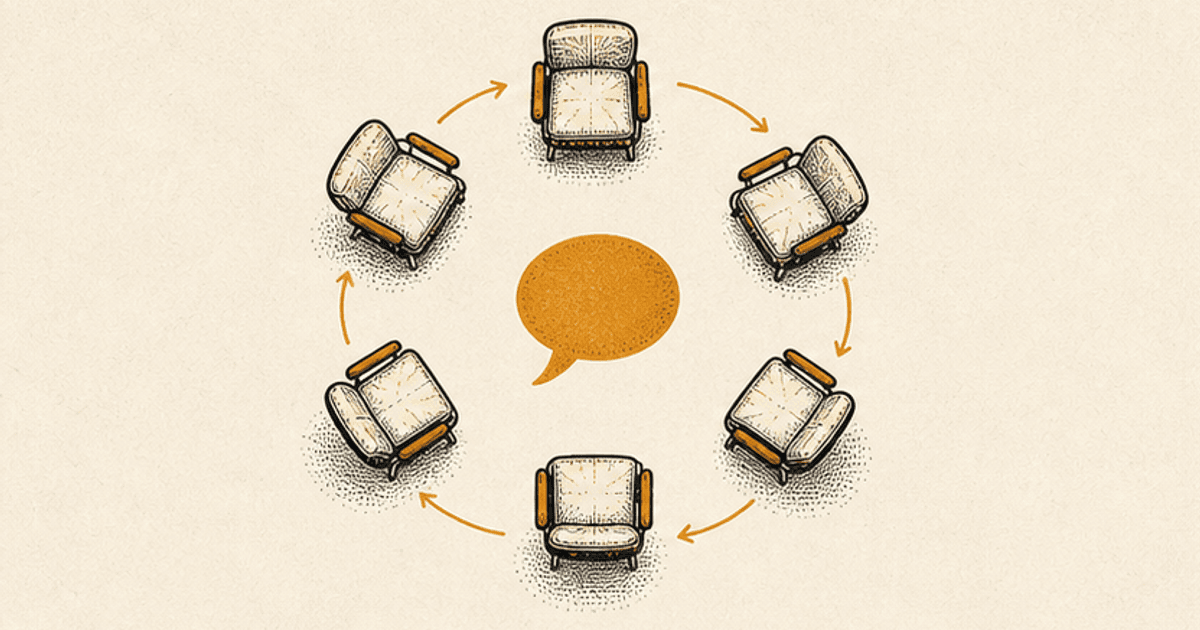
Setup: Arrange chairs in two concentric circles or two parallel rows facing each other. One row stays seated - these are the "hosts." The other row rotates - these are the "visitors." In a row format, the person at one end moves to the back of the opposite row after each round. Time per round: 2-3 minutes for lower levels, 3-4 minutes for B2 and above. Number of rounds: 5-8 rounds works well for a 20-30 minute activity. Signal: A clear audible signal - clap, bell, or timer alarm - tells visitors to rotate. Use a visible classroom timer so students can pace themselves rather than waiting for you. Questions: One question per round, projected or written on the board before the round starts. Students discuss the same question with each new partner.The question strategy
Speed conversation works with three question types, each producing different outcomes:
Personal opinion questions work best for mixed levels and warm-up purposes. "What's the most useful thing you've learned this year?" "If you could change one thing about your daily routine, what would it be?" Every student has an answer, and conversations start immediately. Hypothetical questions generate the most energy at B1+. "If you could have dinner with anyone in history, who and why?" "You win a million pounds but can't spend it on yourself - what do you do?" The novelty keeps conversations fresh across multiple rounds with different partners. Topic-specific questions work well when speed conversation follows a class topic. Studying environment? "What's one thing you personally do - or could do - to reduce your impact?" The activity consolidates content knowledge while building fluency.For a ready-made bank of discussion questions at every level, see our posts on 50 ESL discussion questions about travel and the rest of the discussion question series.
Making it work for different class sizes
20-30 students: The classic two-row or two-circle format. Works perfectly. 30-40 students: Split into two simultaneous groups in different parts of the room. Each group runs independently with its own timing. Under 16 students: Reduce to a single circle. Every student rotates clockwise. More intimate, slightly less energy, but the same mechanics. Odd numbers: One group of three with a visitor and two hosts. The two hosts both respond to the visitor's question. Not ideal but workable.Variations that keep it fresh
The double question
Give two questions per round. Students choose which one to discuss - or must cover both if time allows. The choice adds agency and lets faster pairs go deeper.
The topic swap
Each student is assigned a topic they must mention naturally in every conversation. "Find a way to bring up your favourite film." "Work in the word 'ambitious' at some point." Students have fun trying to meet the constraint while also having a real conversation.
The follow-up rule
After the first round, add a rule: you must start every conversation by asking a follow-up question about what your previous partner told you. "I was just talking to someone who said they'd spend a million pounds on..." This trains active listening and creates a sense of connected conversation across the room.
The reporting round
After the final rotation, students return to their first partner and report the most interesting thing they heard in any conversation. "Someone told me they once..." Practises narrative retelling, summary, and reported speech.
Tool tip: YapYapGo runs pair rotations automatically between rounds - the shuffle takes five seconds and handles the logistics so you don't have to direct traffic. Students can see who they're paired with on screen. You can also use a standalone activity timer with a custom label for each round if you're running this manually.
Managing the energy
Speed conversation generates significant noise. That's mostly a good sign - it means everyone is talking. But it can tip from productive into chaotic. Watch for:
Volume creep: Students raise their voices to be heard over their neighbours, who then raise their voices further. A quick "volume check" signal from you helps students self-regulate. Partner drift: Visitors who don't rotate on the signal. Make the rotation rule completely clear before starting: on the signal, every visitor moves immediately. No finishing a sentence. The abruptness is part of the format. Dead-end conversations: Pairs who exhaust a question in 60 seconds and sit in silence. Give students permission to move to a second question or go off-topic once the assigned question is covered. Silence is the only failure state.Why it's worth the setup
The research case for speed conversation is the same as for pair work generally - it multiplies individual speaking time dramatically. But it adds something pair work in fixed pairs doesn't: variety.
Speaking to eight different partners in 25 minutes means eight different accents, eight different communication styles, eight different perspectives on the same question. Students adapt. They rephrase when they're not understood. They find new ways to make their point when a strategy doesn't work with partner five the same way it did with partner two.
That adaptability is what real-world communication requires - and it only develops through practising with varied partners. Speed conversation is one of the most efficient ways to build it.
Sources:
- Long, M. (1996). The Role of the Linguistic Environment in Second Language Acquisition. Handbook of Second Language Acquisition. - New partners create fresh acquisition opportunities through negotiation of meaning.
- Mackey, A. (1999). Input, Interaction, and Second Language Development. Studies in Second Language Acquisition. - Varied interaction partners accelerate acquisition.
- Nation, I.S.P. (1989). Improving Speaking Fluency. System. - Timed speaking under constraint builds automaticity.