← All posts
How to Challenge Advanced Speakers Without Leaving Beginners Behind

How to Challenge Advanced Speakers Without Leaving Beginners Behind

The mixed-level classroom presents a specific paradox. The activity that challenges your C1 student is incomprehensible to your A2 student. The activity that works for your A2 student bores your C1 student into checking their phone. If you pitch it in the middle, you serve nobody particularly well.

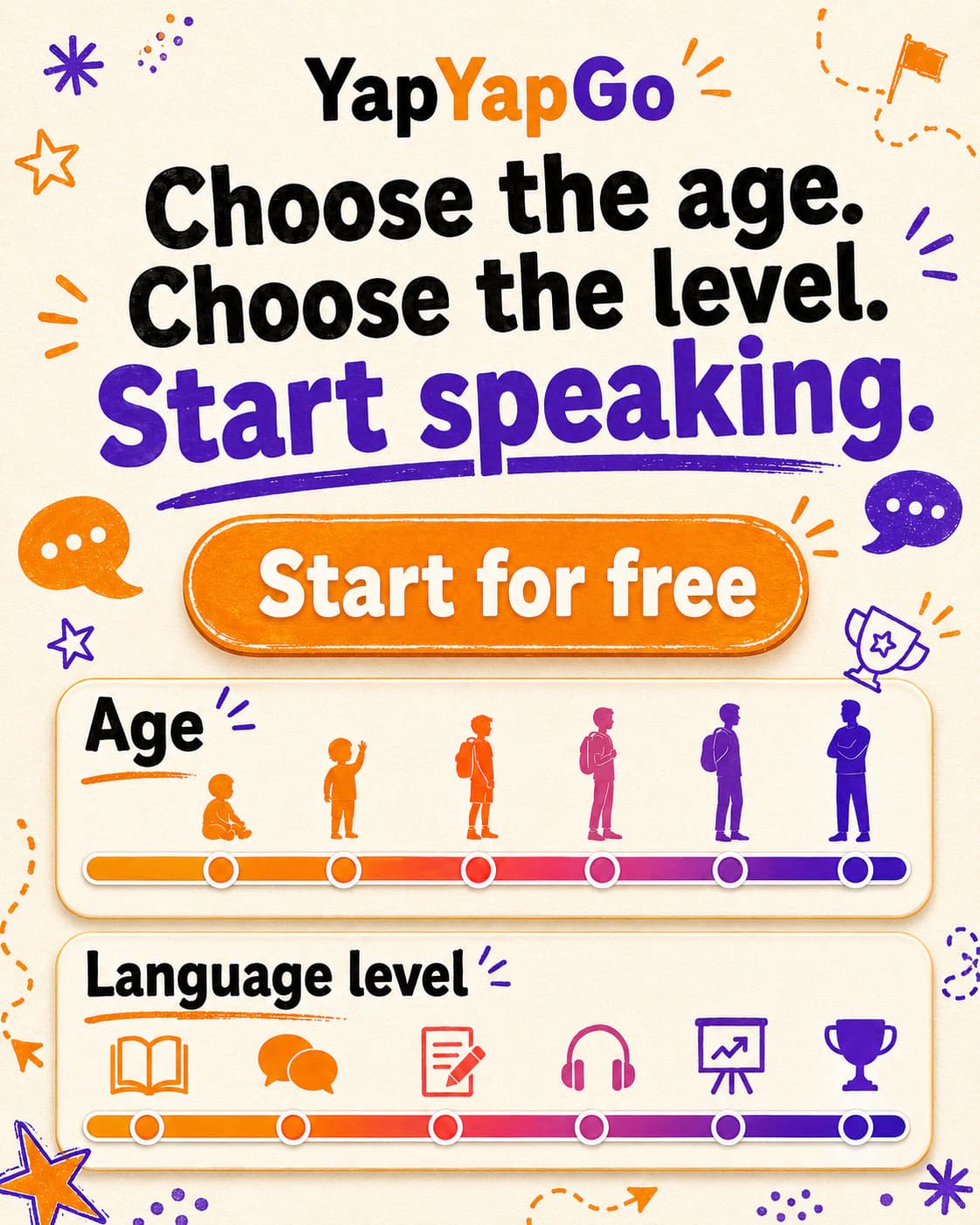
Most teachers resolve this by teaching to the middle and hoping for the best. There's a better approach - one where the same activity genuinely challenges every level in the room simultaneously. YapYapGo is a classroom speaking practice tool for ESL and EFL teachers with built-in CEFR level filtering, so advanced students get C1 questions while beginners get A2 questions in the same session. But the strategies below work with any activity.

The open-ended question principle

The most reliable tool for mixed-level differentiation is the open-ended question - one where the "right answer" is a matter of opinion rather than knowledge, and where the complexity of the answer is determined by the student rather than the question.

"What is your opinion of social media?" can be answered at A2 ("I think social media is good because I can talk to my friends") or at C1 ("The algorithmically-mediated nature of social media creates filter bubbles that reinforce existing beliefs while giving users the illusion of broad engagement"). Same question, radically different linguistic demands.

The trick is choosing questions that:


  • Have no single correct answer

  • Can be approached from concrete personal experience (accessible to A2) or abstract systemic analysis (appropriate for C1)

  • Don't require specialist knowledge that lower-level students won't have

Discussion questions about everyday topics - money, work, relationships, education, technology - hit this sweet spot consistently. Specialist topics - economic theory, legal philosophy, biochemistry - don't, because lower-level students lack the background knowledge to engage, regardless of their language level.

The extension question strategy

Give all students the same opening question. Then prepare extension questions that push advanced students further while lower-level students are still working on the first one.

Example sequence:
  • Starter (A2 accessible): "Do you think it's important to save money? Why?"
  • Extension 1 (B1): "How does the attitude towards saving money differ between generations in your country?"
  • Extension 2 (B2): "To what extent is the ability to save money a privilege rather than a personal virtue?"
  • Extension 3 (C1): "How does the financialisation of everyday life change people's relationship with money, security, and risk?"

Pairs work through the sequence at their own pace. Fast pairs (often higher level) reach the harder questions. Slower pairs (often lower level) spend more time on the accessible ones. Both are appropriately challenged. Neither is waiting.

This works best with a visible activity timer set to five to seven minutes. When time is called, all pairs stop regardless of which question they reached.

Strategic stretch pairing

When you deliberately pair a higher-level student with a lower-level one, the outcome depends almost entirely on whether the activity structure forces equal contribution.

When stretch pairing works for advanced students: Activities with asymmetric roles. If the advanced student is assigned the role of "questioner" while the lower-level student is the "information holder," both students are challenged. The advanced student has to formulate precise, varied questions. The lower-level student has to manage their output carefully. When stretch pairing doesn't work: When the advanced student can just provide all the answers. This bores the advanced student (it's not challenging to explain things you already know) and doesn't develop the lower-level student's production (they receive input but don't produce output).

See our post on stretch pairing vs matched pairing for the full framework.

Tool tip: YapYapGo supports both stretch and matched pairing modes. For a mixed-level class, you can use stretch pairing for discussion activities and matched pairing for timed fluency work - switching between them without any rearrangement needed. A classroom countdown timer keeps all pairs on the same schedule regardless of level.

Task variation within the same activity

Give all students the same broad task, but vary the cognitive demand of the specific prompt within it.

Example: the debate activity

All pairs run a debate. But:


  • A2 pairs debate: "Is coffee better than tea?"

  • B1 pairs debate: "Should fast food restaurants be taxed more heavily?"

  • B2 pairs debate: "Is the four-day working week a practical policy or an idealistic one?"

  • C1 pairs debate: "To what extent does economic growth necessarily conflict with environmental sustainability?"

Same format, same timing, same teacher role. Different linguistic and cognitive demands for each level pair. After the debates, bring the class together and ask each level group to share their main argument. Lower-level students present simple, accessible conclusions. Advanced students present nuanced ones. Everyone contributed; everyone felt appropriately challenged.

Challenge advanced students through the role they play

Sometimes the challenge for advanced students isn't the topic but the role. These roles are inherently more demanding for higher-level students:

The devil's advocate: Must argue against their actual position. Requires flexible thinking and a wider vocabulary of argumentation. The summariser: Must listen to a pair's conversation and summarise it accurately for the class. Requires active listening, precise recall, and clear reporting language. The questioner: Must generate follow-up questions only - no statements, no opinions. The constraint forces linguistic creativity. The interpreter: In a three-person group, one person explains their view, one gives the opposing view, and the advanced student must interpret both views to a hypothetical neutral observer. Requires sophisticated discourse management.

What not to do

Don't give advanced students more of the same. If lower-level students do five discussion questions, giving advanced students eight isn't differentiation - it's just more work. The challenge should be qualitative, not quantitative. Don't make differentiation visible in a stigmatising way. If advanced students get purple cards and lower-level students get yellow cards, everyone knows what the colour-coding means. Design activities where the differentiation is built into the task structure rather than announced. Don't let advanced students drift. Without a clear challenge, advanced speakers will coast - producing fluent, comfortable language that doesn't push their development. The extension question sequence, the demanding role, the stretch pairing with the right task design - these are what keep them working.

For the broader framework on managing mixed-level speaking classes, see our post on speaking activities that work in mixed-level ESL classrooms. And for scaffolding the other end of the spectrum, see scaffolding speaking for lower-level students.

YapYapGo filters questions by CEFR level automatically, so in a mixed class, advanced students and beginners can work simultaneously with questions that are genuinely appropriate for each. Free to start. A random team maker is useful when creating deliberately mixed-level groups for specific activities.
Sources:
  • Vygotsky, L.S. (1978). Mind in Society. Harvard University Press. - The Zone of Proximal Development: challenge slightly beyond current ability drives growth.
  • Tomlinson, C.A. (2001). How to Differentiate Instruction in Mixed-Ability Classrooms. ASCD. - Task variation and extension questions as practical differentiation tools.
  • Storch, N. & Aldosari, A. (2013). Pairing Learners in Pair Work Activity. Language Teaching Research. - When stretch pairing works and when it doesn't.
  • Kieffer, M. et al. (2025). Heterogeneous vs Homogeneous Grouping. American Educational Research Journal. - No single grouping is universally best; task design matters more than pairing.


Ready to try it in your classroom?

YapYapGo is free to start — no account needed. Set up your first speaking session in under a minute.

Start for free →