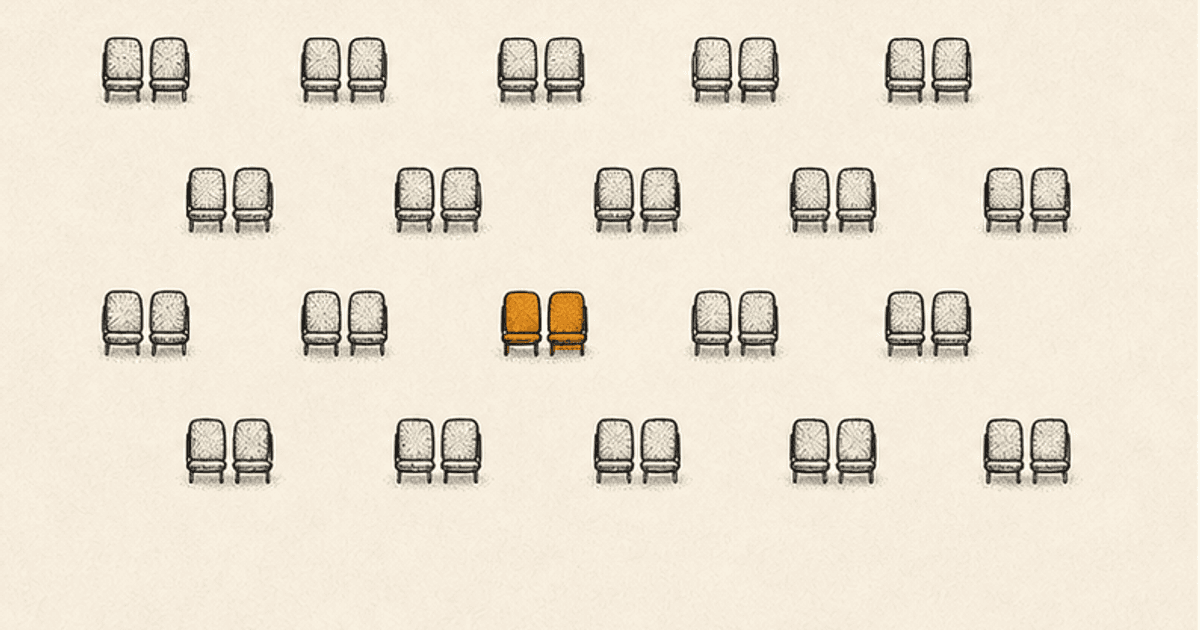
The challenge of running pair work with 40 students is one that teachers in Asia, the Middle East, and large state schools encounter every day. When a teacher in these contexts reads research recommending pair work as the gold standard for speaking practice, the reasonable response is: "Yes, but you've never tried managing 20 simultaneous conversations in a classroom with fixed desks and a duty teacher next door who will complain about noise."
This post is for those teachers. The goal is not to pretend that 40-student pair work is effortless - it isn't. It's to give you the specific systems that make it manageable, the logistics that prevent chaos, and the mindset shift that lets you see 40 students talking simultaneously as a success rather than a problem.
YapYapGo is a classroom speaking practice tool for ESL and EFL teachers that handles the pairing, question delivery, and timing automatically - which removes the three biggest logistical challenges of large-class pair work. Here's everything else you need.The mindset shift first
The biggest barrier to pair work in large classes is not logistical - it's psychological. Teachers who manage 40-student pair work well have made one mental shift: they have redefined "in control" to mean "every student is productively engaged" rather than "every student is quiet and looking at me."
Twenty pairs of students speaking quietly but simultaneously is controlled. It looks chaotic compared to 40 students silently watching the teacher, but it produces fourteen times more individual speaking practice and, paradoxically, is often easier to manage because students are too busy to cause trouble.
The noise is the activity working. The goal is not silence; it's productive low-level noise.
System 1: The fixed pair system
For classes with fixed desks (the most common large-class constraint), establish a permanent partner assignment at the start of term. Each student has a designated pair partner - the person next to them, or diagonally adjacent if the room layout requires it.
Benefits: zero time spent organising pairs. The moment you say "pair work," everyone knows who their partner is and turns to face them.
Rotation: once per week, shift the seating plan so students get a different permanent partner. This maintains the logistical simplicity while providing variation over time.
System 2: The numbered rotation
Number students 1 to 40. For rotation between rounds: all odd-numbered students move one seat clockwise. Even-numbered students stay. New partners, 20 seconds, no chaos.
Practice this rotation twice at the start of term until it's automatic. A class that can rotate smoothly can do four rounds of pair work in 15 minutes instead of two.
System 3: The zoned classroom
Divide the room into four zones of ten students each. Zones work independently: pairs within a zone discuss while you circulate through zones sequentially.
This reduces the acoustic challenge (four quieter clusters rather than one loud room), makes monitoring manageable (you spend two to three minutes in each zone per round), and allows you to give zone-specific feedback at debrief.
Tool tip: YapYapGo displays pairs on screen and manages the rotation automatically. In a 40-student class, you project it on the board, students see their pair assignment, and the activity begins within 60 seconds. No manual calling of names, no confusion about who works with whom. The classroom countdown timer is visible to the whole room simultaneously so all 20 pairs work to the same clock.
Managing the noise
Twenty pairs in a room with hard floors and 40 voices will be loud. Three strategies manage this without killing the energy:
The whisper rule: Partners must be able to hear each other clearly, but the pair next to them should not hear. Demonstrate the volume before the activity starts - model the difference between a classroom voice and a conversation voice. The progressive start: Begin with three pairs demonstrating the activity at low volume while others watch. Then release everyone together. The low-volume demonstration sets the acoustic norm before the full class joins. The signal system: Establish one visual signal (raised hand, lights flickering, a specific gesture) that means "reduce volume immediately." Practice it before the first pair work session. Students who see the signal reduce their volume. No verbal instruction needed in the middle of 40 conversations.Questions and content at scale
With 40 students, projecting a single question means 20 conversations on the same topic simultaneously. This creates two problems: it sounds like 40 people saying the same thing (true, but not actually a problem), and fast pairs who finish quickly have nothing to move to.
Solution: the question ladder. Project three to four questions simultaneously, numbered 1-4 in increasing difficulty. Pairs start at question 1 and work through as many as they complete before time is called. Fast pairs reach question 4; slower pairs give quality time to question 1. No one finishes and sits in silence. Solution: the theme not the question. Give the topic ("travel," "technology," "work") and let pairs generate their own questions. Higher-level students produce complex questions; lower-level students produce simple ones. The content differentiates naturally.Monitoring 20 pairs
You cannot meaningfully listen to 20 pairs in a three-minute round. Stop trying. Instead, use targeted monitoring:
One pair per round for assessment: Choose one pair before the round starts. Spend the full round with them. Note specific language use. Give targeted feedback at debrief. Over 20 lessons, you observe every student multiple times. Signal monitoring: Circulate and watch for the signs that pairs have stopped working: phones appearing, students looking around, one student doing all the talking. These are intervention signals, not language quality signals. A quick "how's it going? What's your main argument?" restarts stalled pairs without stopping the class. Zone sweep: Do a full room walk in 90 seconds. Note which zones are most engaged, which are struggling. Address zones in the debrief, not individual pairs.The debrief at scale
With 40 students, a whole-class debrief where everyone can contribute takes too long. Instead:
Pair-to-pair sharing: After each round, two pairs combine. Each pair has 60 seconds to share their most interesting point. The combined group of four then shares one insight with the class. You manage 10 groups rather than 40 individuals. Three-share rule: Call on exactly three pairs per debrief, selected by random student picker. This is enough to create a shared moment, too quick for energy to drop, and fair because it's visibly random. The board summary: Write one or two phrases or ideas you heard during circulation on the board. "I heard someone say 'on balance, the trade-offs make it worthwhile' - that's a phrase worth using." This rewards good language without requiring the student to perform.The 40-student reality
Running pair work well with 40 students takes three to four lessons to establish as a routine. The first lesson will feel chaotic. The second will be better. By the fourth, students will know the partner system, the rotation, the volume expectation, and the question ladder. Pair work will take 60 seconds to launch and run itself.
The investment is worth it. Even imperfect pair work in a class of 40 gives each student more speaking time than a perfectly managed teacher-fronted lesson with 40 students. The maths always favours pair work. For more on the research case, see speaking activities for large ESL classes. An activity timer with labelled rounds helps large classes self-manage transitions between discussion rounds without needing a verbal announcement.
Sources:
- Long, M. & Porter, P. (1985). Group Work, Interlanguage Talk, and Second Language Acquisition. TESOL Quarterly. - Pair work in large classes: the case for simultaneous interaction over sequential.
- Ur, P. (1996). A Course in Language Teaching. Cambridge University Press. - Practical management for large communicative classes.
- Dörnyei, Z. & Murphey, T. (2003). Group Dynamics in the Language Classroom. Cambridge University Press. - Classroom community and management in large groups.