← All posts
Think-Pair-Share for ESL: The Scaffolding Technique That Gets Everyone Talking

Think-Pair-Share for ESL: The Scaffolding Technique That Gets Everyone Talking

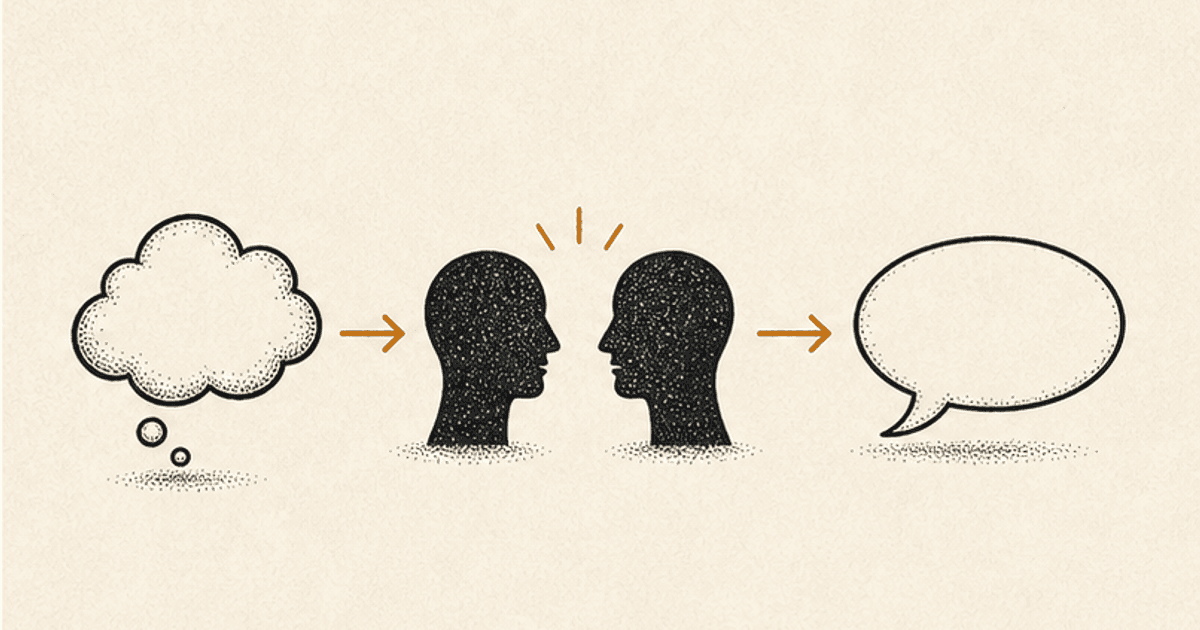
The problem with traditional whole-class Q&A is one every teacher recognises: one student answers while 29 wait. Think-Pair-Share was developed by Frank Lyman in 1981 as a simple three-stage technique for getting every student engaged with a question rather than just the fastest, most confident few. In a traditional Q&A format, one student answers while 29 wait. In Think-Pair-Share, every student thinks, every student speaks, every student is ready to contribute.

In ESL classrooms, it solves two specific problems simultaneously: it gives anxious students processing time before they have to speak, and it ensures that lower-level students who lose confidence in whole-class formats still get speaking practice in the pair stage. The research support is unusually strong for a specific classroom technique - and it's been widely validated in second language contexts.

YapYapGo is a classroom speaking practice tool for ESL and EFL teachers built around exactly this principle: structured preparation before pair discussion, before whole-class sharing. Here's how to implement Think-Pair-Share effectively at every level.

The three stages and why each matters

Think (60-90 seconds)

Students receive a question and think about their answer silently. They may write key words - not a full response, just notes. They do not speak during this stage.

This stage is the most commonly skipped in ESL classes and the most important. Research by Foster and Skehan found that even one minute of preparation before a speaking task produces significant improvements in fluency, accuracy, and complexity of output - particularly for lower-level students. Students who jump straight to speaking produce simpler language under higher stress. Students who have 60 seconds to think produce more complex language under lower stress.

For ESL students specifically, the Think stage allows mental translation without the simultaneous pressure of production. Students who are translating from their first language while speaking produce less complex, less fluent output than students who have already worked through that translation before they begin speaking.

Pair (2-4 minutes)

Students discuss with one partner. This is the core speaking stage. Both students talk. Both students listen. The whole class is producing language simultaneously.

The pair stage does something whole-class discussion cannot: it gives every student a real conversational partner who needs to understand them. In whole-class Q&A, students perform for an audience. In pair discussion, they communicate with a real person. These are genuinely different linguistic tasks, and communication-oriented pair discussion produces better acquisition outcomes.

For anxious students, the pair stage is the key: speaking to one person is dramatically less frightening than speaking to the class. Students who have never volunteered an answer in class will often speak fluently and at length in a pair discussion with a classmate.

Share (2-3 minutes)

Students share what they discussed with the class. Crucially, they are sharing their partner's views as much as their own: "My partner said... and I said..." This framing reduces the anxiety of whole-class speaking because students are reporting rather than performing.

The share stage connects the pair work back to the whole class, generates comparison of different pairs' responses, and gives you assessment information about the spread of understanding and opinion in the room.

Implementing it in an ESL class

The transition signals. Think-Pair-Share needs clear, consistent signals for each transition. Many teachers use a visible classroom countdown timer for the Think phase (60 seconds, everyone sees it counting down) and a different signal for the Pair-to-Share transition. Once the format is established, students move through the stages automatically. The question matters. Think-Pair-Share works best with questions that have no single right answer - opinion questions, interpretation questions, prediction questions. "What do you think causes crime?" works. "What is the capital of Canada?" doesn't - students either know or they don't, and pairing them doesn't help. The think prompt needs to be specific. "Think about this" produces less useful preparation than "Think about your main opinion and one reason for it." The specificity of the think prompt determines the quality of the pair discussion. Vary what gets shared. Don't always share to the whole class in the same way. Sometimes ask pairs to share their most interesting disagreement. Sometimes ask them to find one thing in common with their neighbours. Sometimes ask for a show of hands on how many pairs agreed vs disagreed. Variety keeps the share stage from feeling like a repetitive check-in.
Variations that extend the format

Think-Pair-Share-Square

After the initial pair discussion, two pairs combine to form a group of four. Each pair summarises what they discussed for the other pair, then the group of four tries to find a consensus or synthesis. Good for more complex questions where multiple perspectives genuinely enrich the discussion.

Think-Write-Pair-Share

Students write their response during the Think phase (one to two sentences, not a paragraph). This is particularly useful for lower-level students who benefit from the additional processing time that writing provides. It also creates a written record you can quickly scan as you circulate.

Think-Pair-Revise-Share

After the pair discussion, students have 30 seconds to revise their original position based on what their partner said. Then they share their revised view, not their original one. This explicitly rewards the willingness to change your mind based on evidence - a genuinely important intellectual habit.

Tool tip: YapYapGo is a free classroom speaking practice tool for ESL and EFL teachers that runs the Pair stage automatically - discussion questions are delivered to all pairs simultaneously, timing is visible to everyone, and partners rotate between rounds. The whole-class Share stage is where you bring everything together. A random student picker makes the share stage fair and slightly surprising, which keeps all students engaged even when they are not the ones reporting.

Why this matters for anxious students specifically

The research on foreign language anxiety consistently identifies whole-class performance as the highest-anxiety context in language learning. Students who are confident in pair discussion often freeze when asked to speak to the class.

Think-Pair-Share reduces whole-class anxiety in two ways. First, students arrive at the share stage having already rehearsed their response with a partner - they know what they want to say and have tested it. Second, the social contract of the share stage is different: students are reporting on a discussion, not performing an individual demonstration of competence.

For the broader research context on why anxious students avoid speaking and what structural changes help, see our posts on how to make speaking less terrifying for shy students and what to do when ESL students run out of things to say. A conversation topic generator provides ready-made prompts for the Think phase if you want fresh questions without preparation time.


Sources:
  • Lyman, F. (1981). Think-Pair-Share. Maryland Cooperative Incentives. - The original framework and rationale.
  • Foster, P. & Skehan, P. (1996). The Influence of Planning and Task Type on Second Language Performance. Studies in Second Language Acquisition. - Planning time dramatically improves spoken output at all levels.
  • Horwitz, E. et al. (1986). Foreign Language Classroom Anxiety. The Modern Language Journal. - Whole-class performance as the primary anxiety trigger in language learning.
  • Kagan, S. (1994). Cooperative Learning. Kagan Publishing. - The educational research base for cooperative learning structures including Think-Pair-Share.

Ready to try it in your classroom?

YapYapGo is free to start — no account needed. Set up your first speaking session in under a minute.

Start for free →