What makes teenagers different from adult learners
Peer opinion matters enormously. An adult who makes a grammar mistake moves on. A teenager who makes a grammar mistake in front of their friends remembers it for weeks. Any activity that puts a teenager on the spot in front of the group needs very careful design.
Interest is non-negotiable. Adults can engage with a topic they find dull because they understand the value of the exercise. Teenagers will not. If the topic is boring to them, they disengage completely and no language learning happens.
Competition works. Teenagers respond to competitive formats in a way adults often don't. Well-designed competition creates energy, motivation, and focus.
Movement helps. Sitting in rows for 45 minutes and being asked to "discuss" is misery for most teenagers. Activities with physical movement change the dynamic immediately.
Pair work beats whole-class speaking for anxiety. A teenager speaking to one partner faces a fraction of the social risk of speaking to the whole class.
Pair and small group activities
1. Hot take battle
Each student prepares their most controversial opinion on a topic - the more unpopular the better. Pairs share their hot takes and the partner must respond. The rule: you must either agree and add to it, or disagree and explain why.
Works because: teenagers actually enjoy mild controversy, and the "most unpopular" framing gives them permission to say something edgy without it being their actual view.
2. Rank it (with a catch)
Give students a list of five items to rank (qualities of a good friend, most important inventions, best school subjects). Each student ranks independently. Then pairs compare and must persuade each other to change at least one ranking.
Works because: ranking produces immediate disagreement, and persuasion is a skill teenagers use constantly in their social lives.
3. The social media hot seat
One student plays a famous person (real or invented). Their partner plays a journalist or fan and must get them to reveal something interesting through interview questions. Two minutes each, then swap.
Works because: celebrities and social media are genuinely interesting to most teenagers, and the role-play removes the "this is my actual opinion" pressure.
4. Two truths and a roast
The classic "two truths and a lie" with a twist: when the lie is identified, the partner delivers a one-sentence friendly "roast" about it. Example: "I knew your lie was that you met Harry Styles because you clearly have no style."
Works because: teenagers find this genuinely funny, and the playful insult format is natural to how they actually communicate.
5. Would you rather: impossible edition
Use genuinely difficult or absurd would-you-rather questions. Not "would you rather have a dog or a cat" but "would you rather have to speak in rhyme for the rest of your life, or only be able to whisper?"
Works because: the absurdity is fun enough to override self-consciousness.
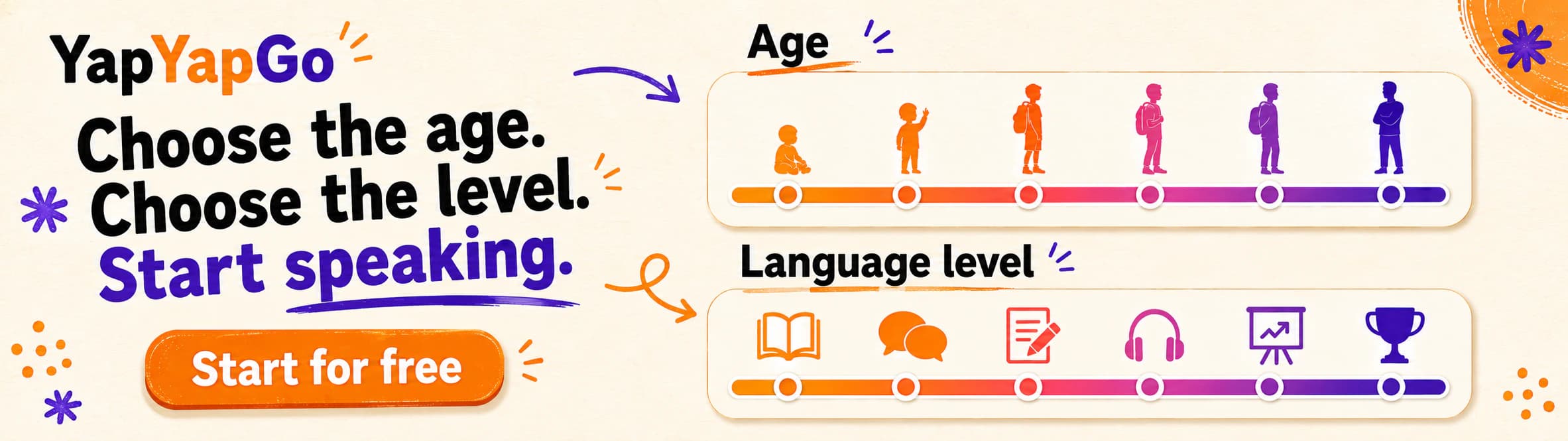
Tool tip: YapYapGo filters discussion questions by age group. For teenagers, the questions assume teen-relevant contexts - school, friendships, social media, future plans - rather than adult workplace or financial topics. The this-or-that generator produces quick binary-choice prompts that work well as low-stakes warm-ups.
6. The unpopular opinion defence
Students are assigned an opinion they must defend, regardless of whether they personally hold it. "You believe that exams should be abolished." "You believe social media is actually good for teenagers." They have 90 seconds to argue their position; partner challenges it.
Works because: the assigned position removes the personal stakes. "I don't actually believe this" is implicit and understood.
7. Story spine
Pairs build a story together using a fixed structure: "Once upon a time..." / "Every day..." / "Until one day..." / "Because of that..." / "Until finally..." / "Ever since then..." Each student alternates sentences, advancing the story.
Works because: the structure does the heavy lifting. Students focus on content, not on constructing sentences from scratch.
8. Compliment swap (anonymous)
Students write one genuine compliment about someone else in the class (anonymously, on a slip of paper). Papers are shuffled. Each student reads out the compliment they received and guesses who wrote it, then explains why they think so.
Works because: receiving a compliment is genuinely motivating, and the guessing element generates natural discussion.