Here's a maths problem no IELTS teacher wants to solve.
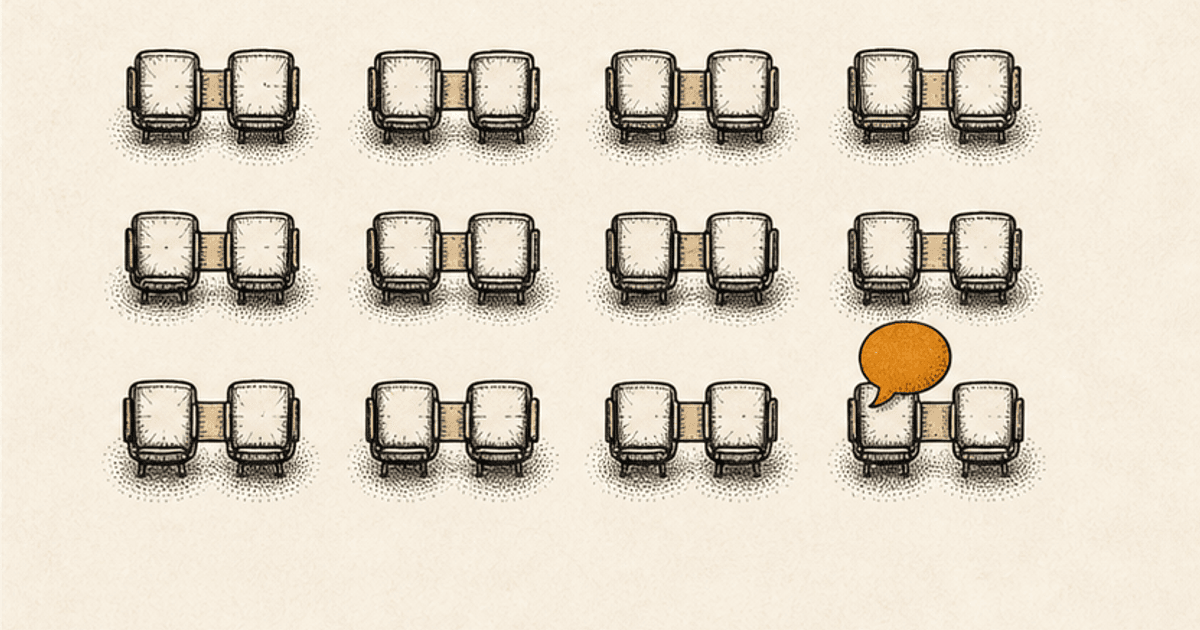
The IELTS speaking test takes 11 to 14 minutes per student. You have 30 students and a 50-minute lesson. That means you can give a full mock test to... three students. Maybe four if you skip the pleasantries.
At that rate, each student gets one proper practice session every seven to ten lessons. For an exam that over four million people take every year - and where familiarity with the format is one of the strongest predictors of success - that's not nearly enough. YapYapGo is a classroom speaking practice tool built specifically for IELTS teachers who need every student practising simultaneously, with exam-format questions and built-in timers.
But there's a way to get all 30 students practising all three parts of the speaking test in a single lesson. And it doesn't require you to clone yourself.
Why practice matters so much
You already know this intuitively, but the research backs it up too: students who practise under exam-like conditions consistently outperform those who just study model answers. The act of actually speaking - out loud, under time pressure, to another person - builds a different kind of readiness than reading or listening ever can.
The fancy term is "retrieval practice," and it works because pulling language out of your head is much harder (and much more useful) than putting it in.
Each part needs different practice
One of the things that makes IELTS speaking tricky to prep for is that each part tests genuinely different skills:
Part 1 is the warm-up - personal questions about your life, your hometown, your hobbies. It sounds easy, but students who only give one-sentence answers get marked down. They need practice giving extended, natural responses without over-rehearsing. Part 2 is the long turn. You get a cue card, one minute to prepare, and then you have to talk for up to two minutes without stopping. This is where most students panic. The one-minute prep time is actually a gift - but only if you've practised using it. A speech timer with traffic-light zones is perfect for this. Part 3 is the deep dive - abstract questions linked to the Part 2 topic. "Why do you think people travel less than they used to?" This requires opinions, reasoning, and more sophisticated language. Students need to practise forming arguments on the spot.A generic "speaking practice" activity doesn't cover all three. You need to target each part specifically.
The lesson format that actually works
Step 1: Pair everyone up
Random pairs work best - it stops students defaulting to their comfort zone and creates more realistic exam-like pressure. One student is the "examiner," the other is the "candidate." Use a student picker or let YapYapGo's shuffle handle it.
Step 2: Display the questions
Project a set of Part 1 questions, or use a tool that serves them. The "examiner" asks, the "candidate" answers. Simple.
Step 3: Time it
For Part 2, use a visible countdown timer - give one minute of prep plus two minutes of speaking, exactly as the real exam does. For Parts 1 and 3, let conversations run naturally and call time when the energy starts to dip.
Step 4: Swap and rotate
After each round, students swap roles (examiner becomes candidate). After two rounds, reshuffle the pairs entirely. New partners mean new conversations and no coasting.
Step 5: Debrief together
Spend the last ten minutes on common issues you noticed while circulating. This is where your expertise adds the most value - you're not running individual tests, you're coaching a room.
With this format, every student gets 15 to 20 minutes of real speaking time in a 50-minute lesson. Compare that to zero minutes for the 26 students who don't get a turn in the traditional one-at-a-time approach.
The question bank problem
IELTS prep eats through questions fast. If you recycle the same Part 2 cue cards weekly, students start memorising answers instead of building flexible speaking skills. And writing fresh, level-appropriate questions for every lesson is a time sink.
Tool tip: YapYapGo maintains an extensive IELTS question bank across all three parts, tracks what each class has already seen, and includes a built-in speech timer for Part 2 that mirrors the real exam. Worth a look if IELTS prep is a regular part of your week.
What about feedback?
Peer practice won't turn your students into IELTS examiners - and it doesn't need to. The goal is maximising speaking time and building format familiarity. Your feedback is still essential, and it's actually more efficient after a round of pair practice than instead of it.
Circulate, take notes, and address patterns as a class. You'll help more students in less time, and they'll have something real to reflect on because they've just been speaking - not just listening to you talk about speaking.
The bottom line
You can't give 30 individual mock tests in one lesson. But you can give 30 students structured practice across all three parts of the exam, with real questions, and with a partner who's actually listening. That's not a compromise - it's a better use of everyone's time.
YapYapGo was designed specifically to help IELTS teachers give their students the speaking practice they need to succeed - even in large classes. It's free to start.Sources:
- IELTS.org (2024). Test Statistics. - 4+ million tests annually, speaking reliability coefficient of 0.90.
- Hao, Z., Baird, J., El Masri, Y., & Double, K. (2025). The Impact of Test Preparation on Performance. Review of Educational Research. - Meta-analysis showing test prep improves scores by 0.21-0.31 SD.
- Roediger, H. & Karpicke, J. (2006). Test-Enhanced Learning. Psychological Science. - Retrieval practice improves long-term retention by ~50% vs restudying.
- Sato, M. & Lyster, R. (2012). Peer Interaction and Corrective Feedback. Studies in Second Language Acquisition. - Peer practice increases both fluency and accuracy.
- Sato, M. & Ballinger, S. (Eds.) (2016). Peer Interaction and Second Language Learning. John Benjamins. - Peer interaction creates more speaking opportunities than teacher-led formats.
- Smith, M., Vickrey, T., Pass, L., & Baird, R. (2012). Combining Peer Discussion with Instructor Explanation. CBE-Life Sciences Education. - Peer + teacher is more effective than either alone.