B1 Debate Motions for Pre-Teens (10-12)
75 intermediate (B1) debate motions for 10-12 year olds. Engaging topics for classroom debates. Preview 5, use all 75 in YapYapGo.

BasicB1 Intermediate
Motion 1
Students should wear school uniforms.
Use in YapYapGo with colour-coded teams and speech timer
Motion 2
Homework should be banned on weekends.
Use in YapYapGo with colour-coded teams and speech timer
Motion 3
Video games are better than books for entertainment.
Use in YapYapGo with colour-coded teams and speech timer
Motion 4
Children should get pocket money for doing chores.
Use in YapYapGo with colour-coded teams and speech timer
Motion 5
Summer holidays are too long.
Use in YapYapGo with colour-coded teams and speech timer
Motion
This statement is gated behind the preview...
Motion
This statement is gated behind the preview...
Motion
This statement is gated behind the preview...
Motion
This statement is gated behind the preview...
🔒

71 more debate motions

Use all 76 debate motions at B1 level in YapYapGo's Debate mode. Teams are colour-coded, speech timers are built in, and motions never repeat.

Colour-coded teamsSpeech timerNo repeatsCustom motions
Try Debate Mode
Part of YapYapGo Basic. From $3/month.

Built for teachers who run speaking lessons every day

YapYapGo handles the logistics: student pairing, question delivery, timers, and session tracking. You focus on facilitation and feedback.

See Plans

Explore More Questions

Other Age Groups

B1 Debate Motions for Pre-Teens (10-12)
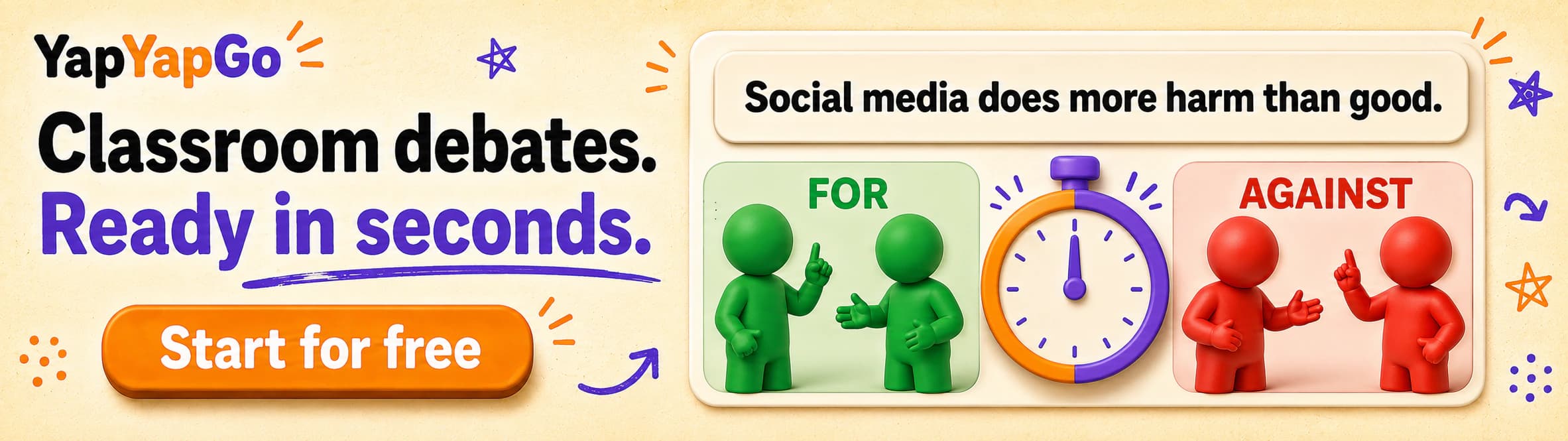
B1 pre-teens can do more than shout opinions. They can give reasons, consider fairness, and understand that different people see things differently. These 75 motions tap into that growing sophistication: 'Zoos are good for animals,' 'Children should choose their own bedtime,' 'It is better to live in a city than in the countryside.' These motions are simple enough for pre-teens to engage with but complex enough that there is no obvious right answer.

At B1, pre-teen debate starts developing the reasoning structures that will serve students throughout their education. A child who learns to say 'I think zoos are bad because animals should be free, but some people say zoos help endangered animals' is practising concession, which is a discourse skill that many adult learners have not mastered.

Reasoning skills through debate

Extend speeches to 45-60 seconds and ask each speaker to include at least one 'because.' This simple requirement transforms debate from opinion-shouting into reasoned argument. The team preparation time (2 minutes) is when students negotiate their 'because' reasons, which produces genuine collaborative English use.

Building both sides of an argument

Try assigning teams randomly and then switching sides for a second round. This teaches pre-teens that arguments exist independently of personal opinion, which is a cognitively advanced concept that debate makes concrete and accessible.

Frequently Asked Questions

A2 motions are simple preferences (cats vs dogs). B1 motions introduce fairness, consequences, and perspectives (should zoos exist, should children choose their bedtime). The language is still accessible but the reasoning required is more sophisticated.
In English as much as possible. Team preparation is where much of the language practice happens. If students use their first language to brainstorm ideas, ask them to translate their arguments into English before the debate begins.
Yes. Debate is particularly popular in after-school settings because the competitive format feels more like a game than a lesson. B1 pre-teens often request debate sessions once they have experienced the format.