Food Discussions for B1 Pre-Teens


Watch a tutorial on how to run this activity with your class
Explore More Questions
Food Discussions for B1 Pre-Teens
At B1, pre-teens can describe a recipe step by step, compare their family's cooking to what they eat at school, and explain why they prefer certain foods. These 50 questions are built for that intermediate capability, asking ten-to-twelve-year-olds to share cooking experiences, discuss food traditions, and give reasons for their eating preferences.
Vocabulary grows beyond basic food names into the words that describe food culture: 'recipe', 'ingredients', 'homemade', 'takeaway', 'healthy', and 'traditional' sit alongside phrases like 'in my family, we always...' and 'I prefer... because...' that help B1 speakers produce connected responses.
Building Extended Turns With Food
The transition from short answers to extended turns is the key B1 challenge, and food questions support it beautifully. When a child describes how their grandmother makes a particular dish, they naturally sequence events, add details, and express opinions. The topic does the scaffolding work that no worksheet can replicate.
Practical Tips for B1 Pre-Teen Groups
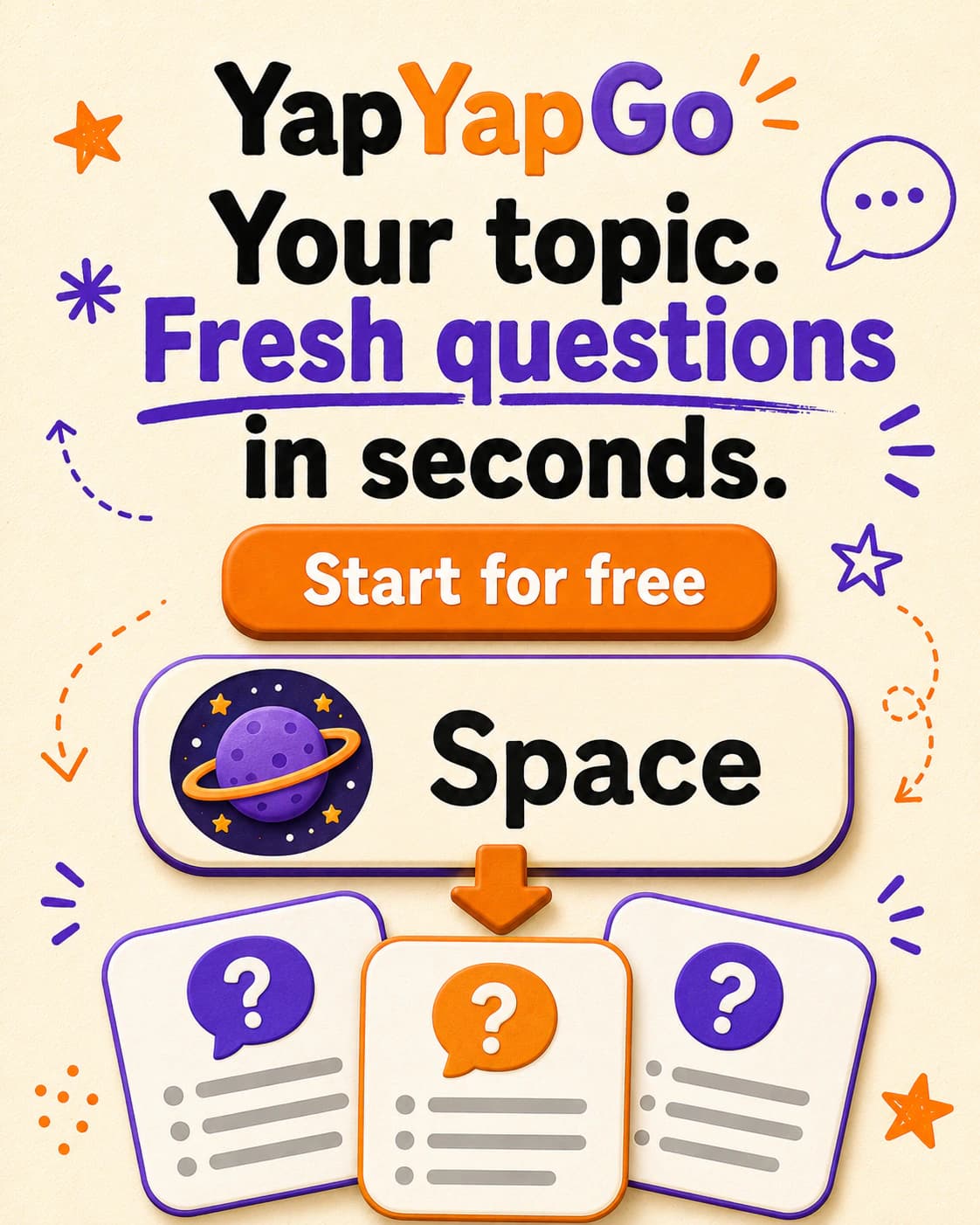
Run three rounds with different partners so every student hears a variety of food stories. YapYapGo's random pairing creates these new combinations automatically, and the question history means no student answers the same question twice even across multiple rounds.