A2 Debate Motions for Early Teens (13-15)

Watch a tutorial on how to run this activity with your class
Explore More Questions
A2 Debate Motions for Early Teens (13-15)
Getting 13-15 year olds at A2 level to speak English voluntarily is a universal teaching challenge. Debate solves it because it taps into what early teens do naturally: argue. These 75 motions are deliberately simple and relate to things 13-year-olds have strong opinions about: 'Video games are good for you,' 'School should start later,' 'Pets are better than toys.' The A2 language means students understand instantly and spend all their cognitive energy on arguing rather than decoding.
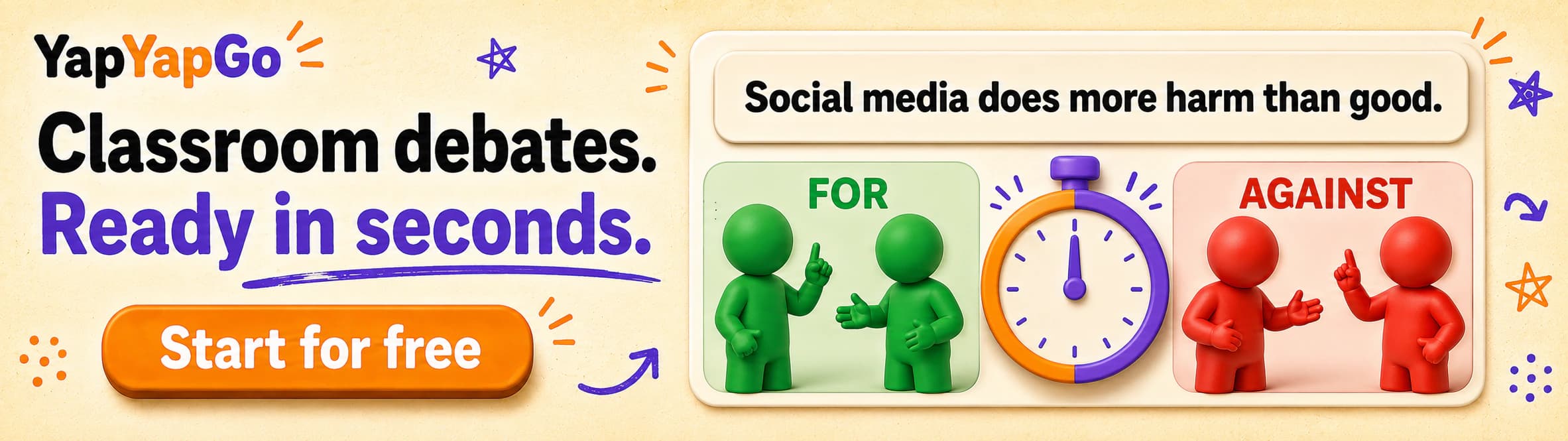
The team format is crucial at this age. Early teens who would never speak individually will argue loudly on behalf of their team. The social dynamic of the group provides safety and motivation simultaneously. In YapYapGo, teams are colour-coded green (for) and red (against), making the structure immediately visual and clear.
Unlocking reluctant A2 teen speakers
Give teams 2-3 minutes of preparation time in which they brainstorm arguments together in English. This is where the real language practice happens. Circulate and help with vocabulary as needed. Then each speaker gets 30 seconds. The short speech time is important because A2 early teens cannot sustain a longer argument, and the brevity keeps the energy high.
Simple motions, serious engagement
These motions work well as a regular weekly activity. Early teens start looking forward to debate days, which creates positive associations with speaking English. Over a few weeks, you will see their argument structures improve from 'it is good because I like it' to 'it is good because it helps you learn and it makes you happy,' which represents genuine B1-bound progress.